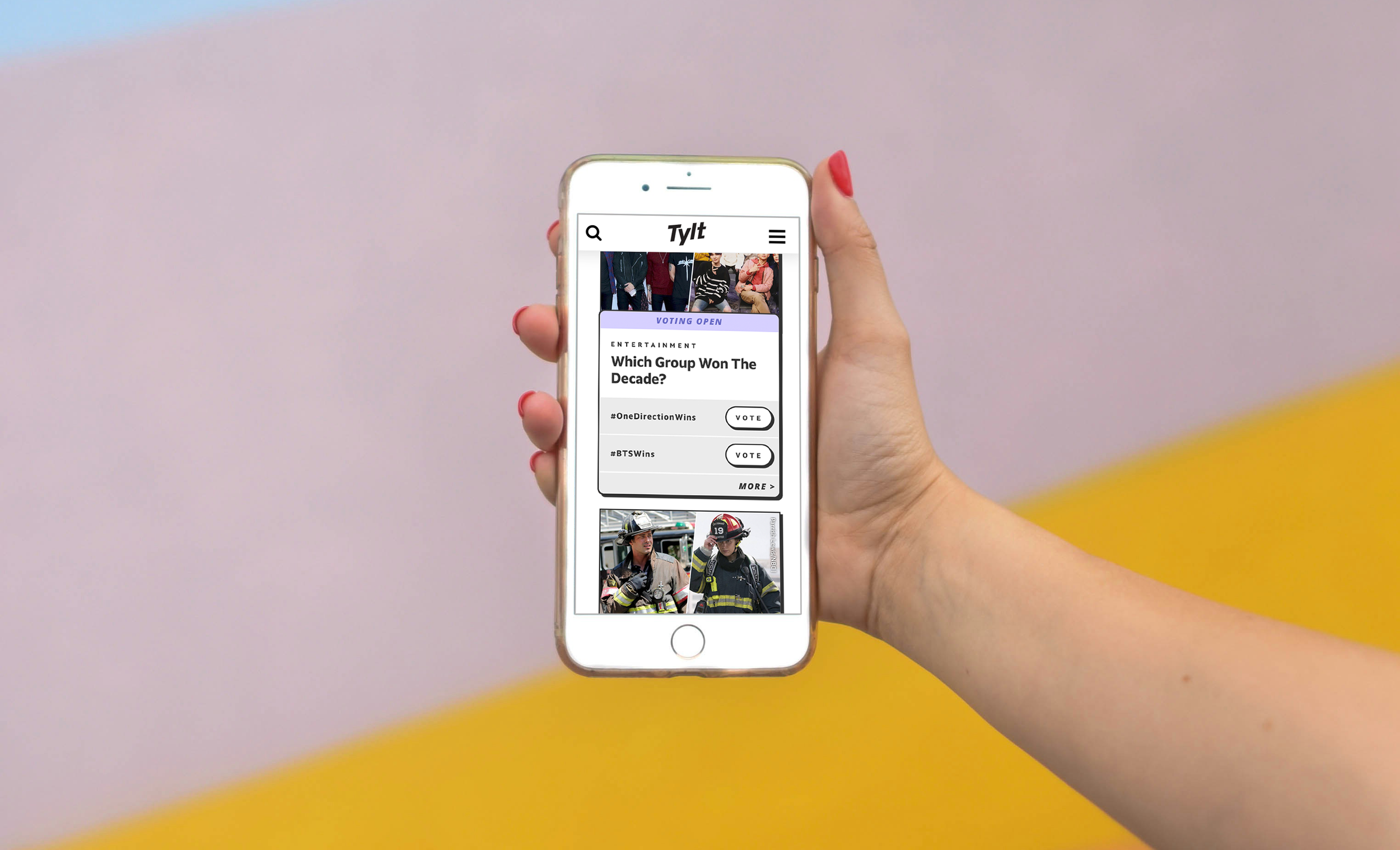
Expanding Product Engagement
Advance Local created The Tylt to turn social conversations into interactive editorial experiences for Millennial and Gen Z audiences. While the initial product attracted significant social traffic, it struggled to convert one-time visitors into active and returning users.
As Director of Product, I rebuilt the product organization and led a team of four through the transformation of a desktop-first MVP into a mobile-first platform.
We increased audience participation, expanded editorial capabilities, and developed new opportunities for monetization through proprietary audience intelligence.
| Overview | |
|---|---|
| Company | Advance Local |
| Product | The Tylt |
| Business Model | B2C & B2B Digital Media Platform |
| Focus | Product Strategy, Product-Led Growth, Platform Modernization, Data Strategy, Monetization | Role | Director of Product |
| Responsibilities | Product Leadership, Team Development, Roadmap Prioritization, Cross-functional Alignment, Data-driven Decision-making |
| Partners | Engineering, Marketing, Editorial, Sales, Executive Leadership |
| Results | Rebuilt the product organization and transformed a desktop-first MVP into a mobile-first platform, increasing page views by 200% and votes per session by 69%. |
-
200% Increase in Page Views
-
69% Increase in Session Engagement
-
700M+ Audience Reach

Unlocking Sustained Engagement
The Tylt attracted audiences through viral conversations across social media, but its desktop-first product was not designed around the behaviors of its predominantly mobile audience. Single-vote experiences offered limited opportunities for continued participation, content discovery, or repeat engagement.
These limitations extended beyond the consumer experience. Editorial teams needed greater flexibility to create engaging content, while the business needed richer audience data and more sustainable opportunities for monetization.
Audience Acquisition
Consumer Experience
Editorial & Data
Limited Product Engagement
High audience reach with limited sustained participation and data acquisition.
Readers
Limited reasons to return
Editorial Teams
Limited storytelling capabilities
Brand Partners
Lacking audience intelligence. Limited montization value.

Building a Roadmap Around Audience Behavior
I combined behavioral analytics, usability testing, audience research, stakeholder interviews, and competitive analysis to understand what drove participation and where engagement stopped.
Our research revealed that audiences were willing to vote but needed more compelling reasons to continue engaging with the platform. We also identified a shift in acquisition from social media toward organic search, where visitors were willing to participate but less inclined to share content socially.
These findings informed a product roadmap focused on mobile-first participation, content discovery, repeat engagement, editorial flexibility, and higher-quality audience data. I established measurable success criteria for feature development and used post-launch performance to inform subsequent investment and prioritization.
Increase Audience Participation
Create more opportunities for users to engage with content, discover relevant conversations, and return to the platform.
Strengthen Proprietary Audience Intelligence
Expand the collection and contextualization of voting and sentiment data to better understand audience preferences and motivations.
Expand Revenue Opportunities
Develop scalable editorial formats, sponsored experiences, and data-driven products that create value for brand partners.


Finding 01
Acquisition behavior was changing
Search visitors were willing to vote but less likely to share content socially.
Product response
Expand on-site engagement
Prioritize content discovery, additional voting opportunities, and return pathways.
Finding 02
Single-vote formats limited participation
Multivote experiences demonstrated significantly higher voting rates.
Product response
Expand interactive editorial formats
Continue investing in series, brackets, and related voting experiences.
Finding 03
Engagement generated valuable data
Votes provided direct signals about audience preferences.
Product response
Develop audience intelligence
Connect voting signals with topic, demographic, and sentiment data.

Aligning the Organization
The Tylt served several interconnected needs. Readers wanted relevant conversations, editors needed flexible storytelling tools, data teams needed stronger behavioral signals, and the business needed sustainable revenue.
I established a shared product vision that connected these priorities, aligning product, engineering, editorial, data science, and commercial teams around a common roadmap.
We connected product decisions to measurable outcomes, including votes per session, repeat engagement, editorial efficiency, sentiment quality, and revenue potential.



Launching a Unified Product and Data Ecosystem
We evolved The Tylt into a connected product ecosystem that brought together interactive editorial content, consumer participation, and proprietary audience intelligence.
A mobile-first consumer platform and an expanded editorial CMS supported new storytelling formats, while voting signals and language-based sentiment analysis created opportunities for more relevant recommendations, data-driven storytelling, and deeper relationships with brand partners.
Editorial CMS
Consumer Platform
Social Channels
Proprietary Audience Intelligence
Readers
Relevant content & recommendations
Editorial Teams
Data-driven storytelling
Brand Partners
Audience insights & sponsored experiences

A System Built to Grow
The Tylt needed to evolve quickly across two interconnected products. The consumer platform and editorial CMS needed to evolve together.
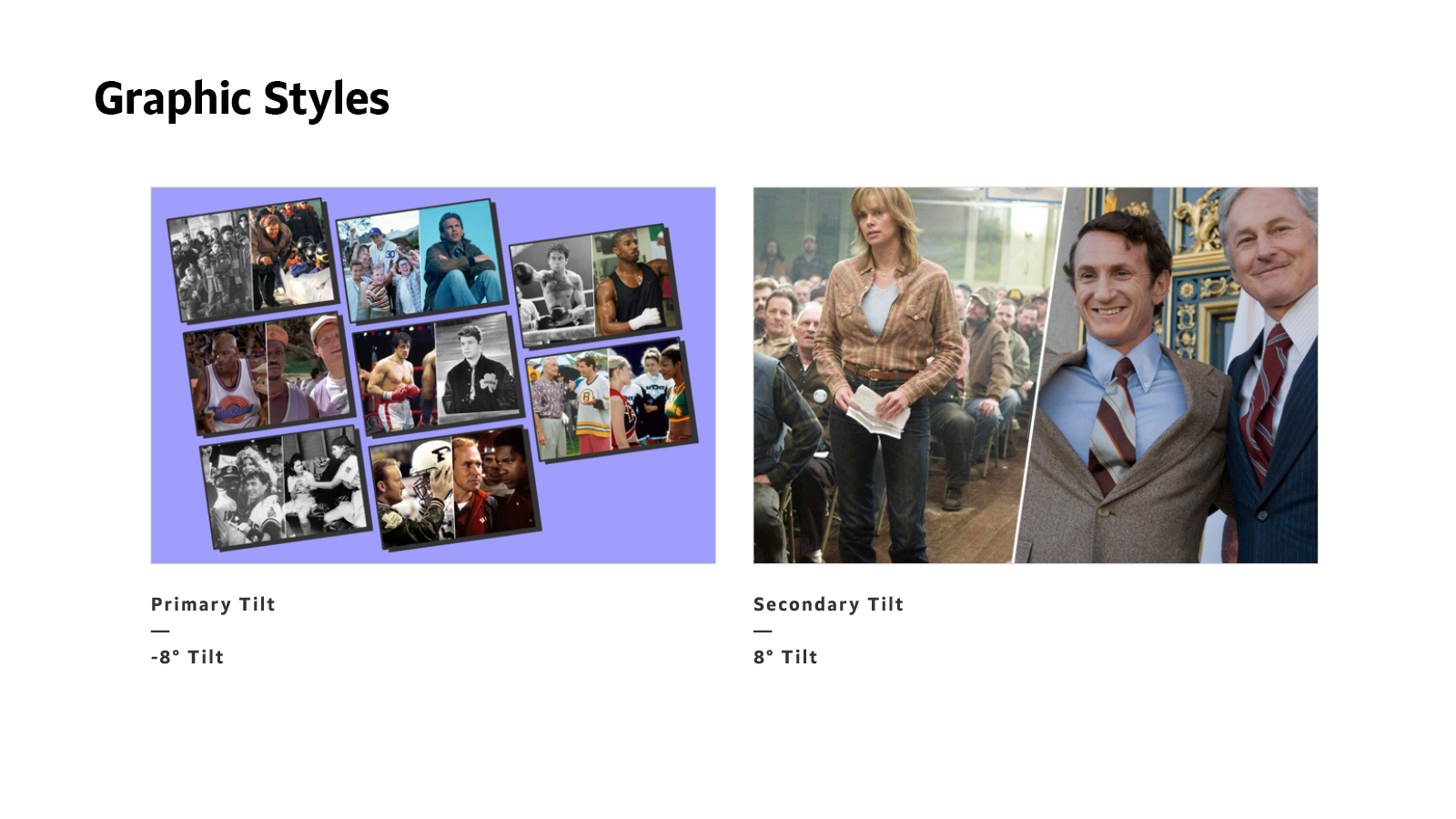
To increase delivery velocity and consistency across the ecosystem, we modernized the visual language and established reusable components, mobile-first responsive patterns, and shared interaction standards.
This enabled teams to test and release new features faster while creating a more cohesive experience for readers and editors.





Turning Social Conversations into Audience Intelligence
Beyond direct voting, The Tylt leveraged proprietary natural language processing (NLP) and sentiment analysis to interpret social conversations at scale.
Working with data science and engineering, I helped connect these technical capabilities to the product strategy, identifying opportunities to transform audience signals into relevant consumer experiences, editorial insights, and commercial intelligence.
From Social Conversations to Sentiment Data
Proprietary natural language processing pipeline
Raw Social Data
Language Preprocessing
Parallel Sentiment Analysis
Trained Model
Message Sentiment Inference
Sentiment Data

Key Design Decisions
Designing for Deeper Participation
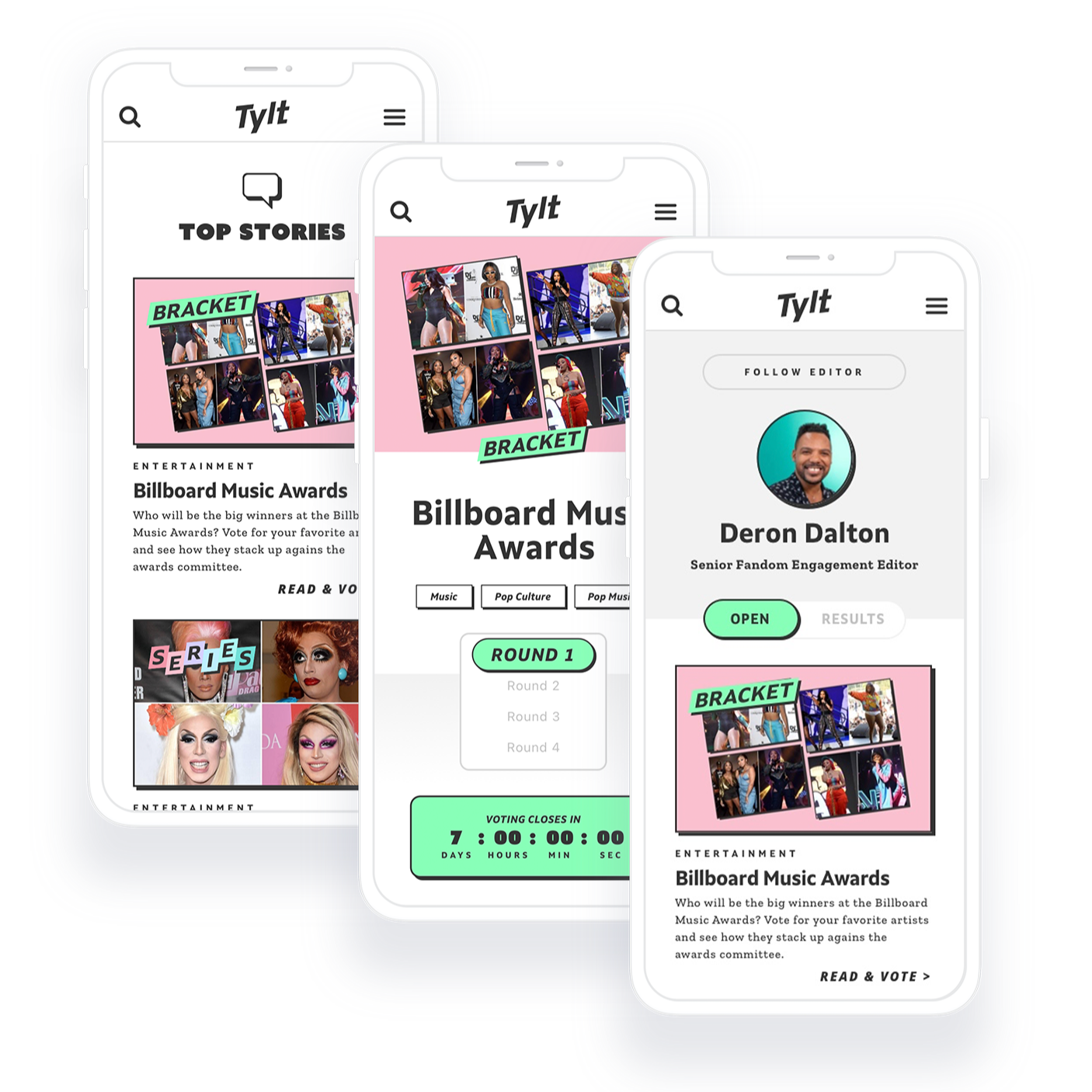
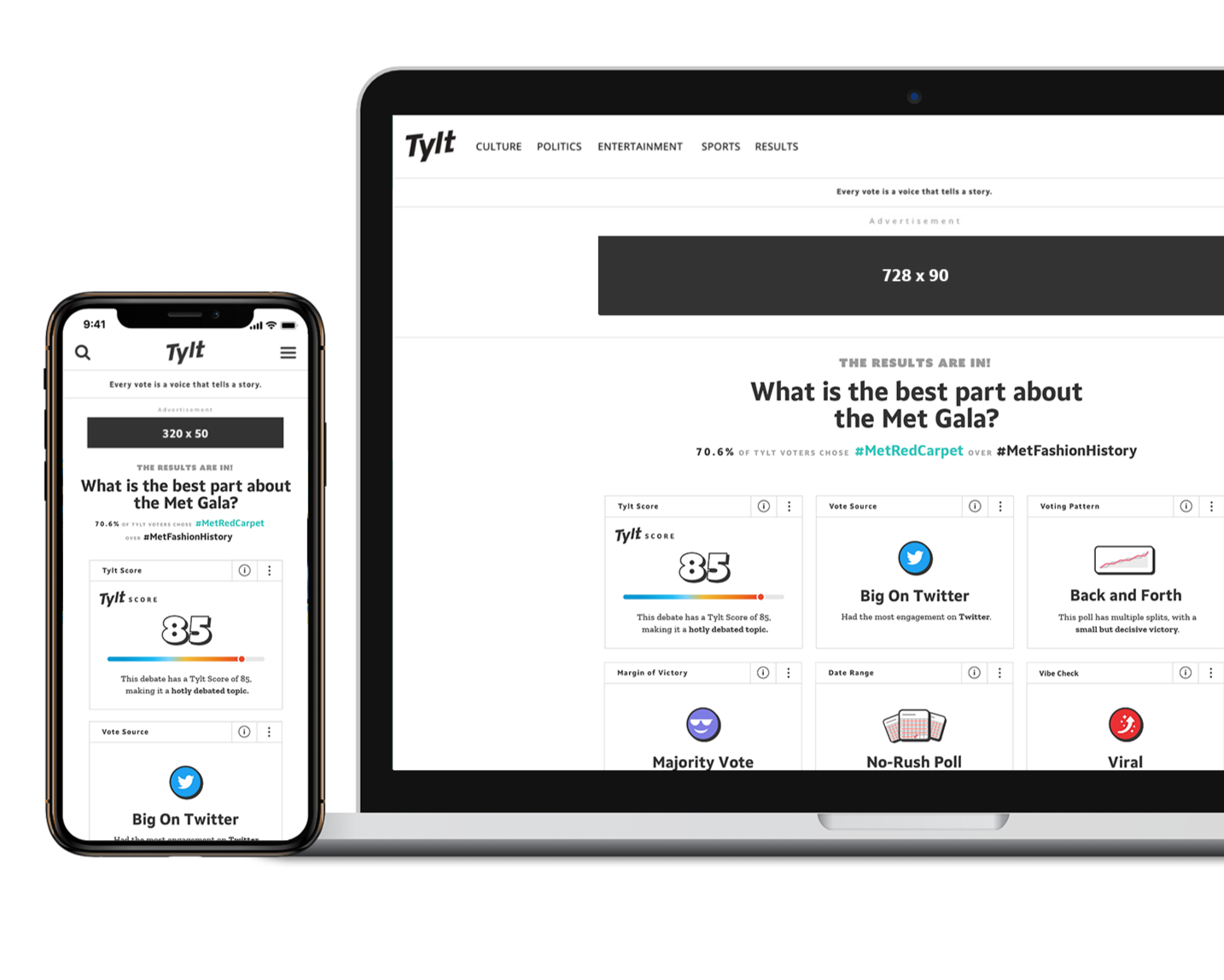
We redesigned the consumer platform around mobile-first behaviors, making participation immediate and creating more opportunities to engage beyond a single vote.
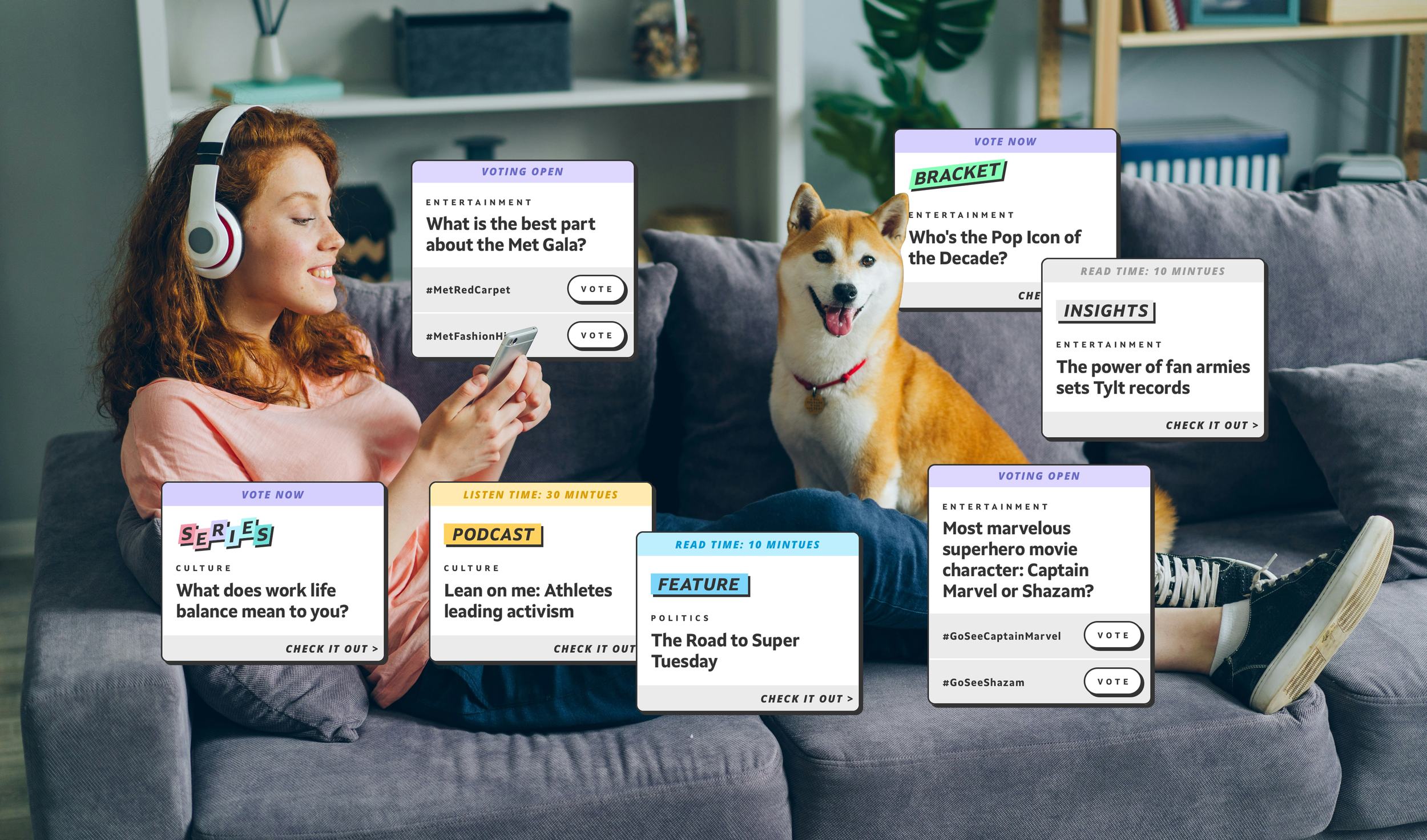
New series and bracket formats supported multiple votes across related topics and rounds, while content recommendations and discovery pathways encouraged users to explore additional conversations.
Making Audience Intelligence Visible
Every vote generated a signal about audience preferences. We transformed these signals into interactive results and trend visualizations that made audience participation part of the editorial experience.
Working with data science and editorial teams, we explored how voting and sentiment data could inform relevant recommendations, content decisions, and proprietary audience insights.
Expanding Platform Monetization
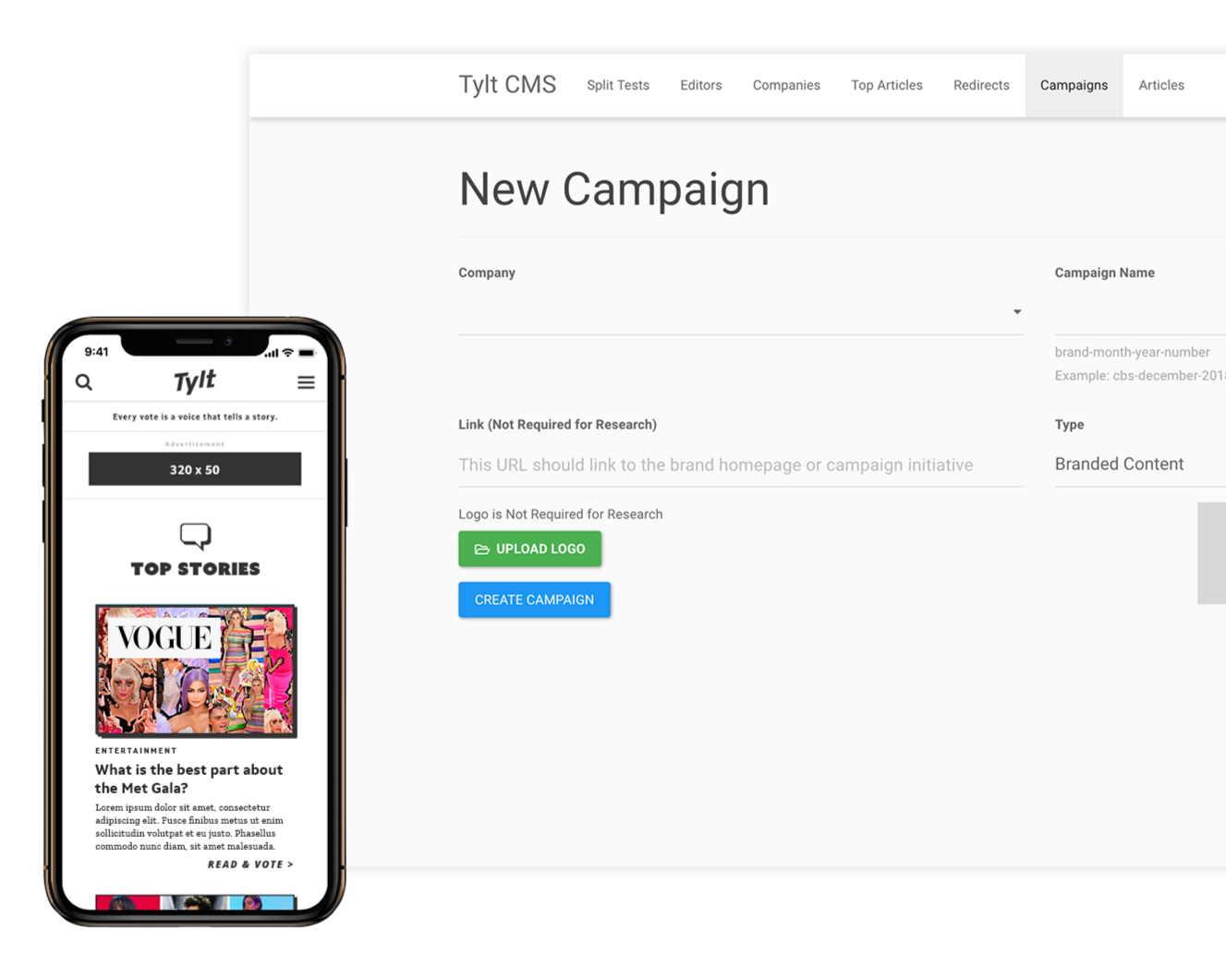
We expanded the two-sided platform to support more flexible editorial production and new commercial opportunities beyond traditional display advertising.
Sponsored editorial experiences, branded conversations, custom video programming, and interactive campaigns gave brand partners relevant ways to engage target audiences while creating new revenue opportunities for the business.

Implementation & Delivery
Restoring Organizational Alignment
I rebuilt relationships across product, engineering, editorial, and data teams, establishing shared priorities, clearer ownership, and more transparent planning and collaboration practices.
I led hiring, mentorship, career development, and performance management while restoring confidence in the product roadmap.
Building a Scalable Design System
We modernized the visual language and established reusable components, responsive patterns, and shared interaction standards across the consumer platform and editorial CMS.
This created a foundation for faster experimentation, consistent experiences, and the introduction of new editorial formats.
01
Define
Establish hypotheses and KPIs
02
Prioritize
Evaluate impact and feasibility
03
Deliver
Release and instrument features
04
Evaluate
Measure performance and iterate
🚀
Results
By aligning product development with audience behavior and business objectives, we increased participation, strengthened direct audience relationships, and created new opportunities for monetization.
The Tylt evolved from a destination for individual viral conversations into a platform for sustained engagement, richer audience intelligence, and new commercial opportunities.
Homepage Improvements
Homepage Bounce Rate
Target: 20% Reduction
Homepage Improvements
Pages per Session
Target: 10% Increase
Multivote Experiences
Manual Votes
Target: 10% Increase
Unlocking Product Growth
Optimizing existing experiences and introducing new interactive formats created deeper audience engagement.
Binary Article
17%
+10% relative to estimated original baseline
Series
73%
+372% relative to estimated original baseline
Brackets
383%
+2,378% relative to estimated original baseline
The original baseline is estimated from reported improvements in vote rate per session, assuming comparability with the subsequent binary article vote rate. Vote rates can exceed 100% because multivote formats allow multiple votes.
-
200% Increase in Page Views
Built a user base in which 75% of participants were Millennial or Gen Z.
-
69% Increase in Votes per Session
The product transformation increased engagement 10×.
-
700M+ Audience Reach
We collected more than 10 million votes, reached an audience of more than 700 million.